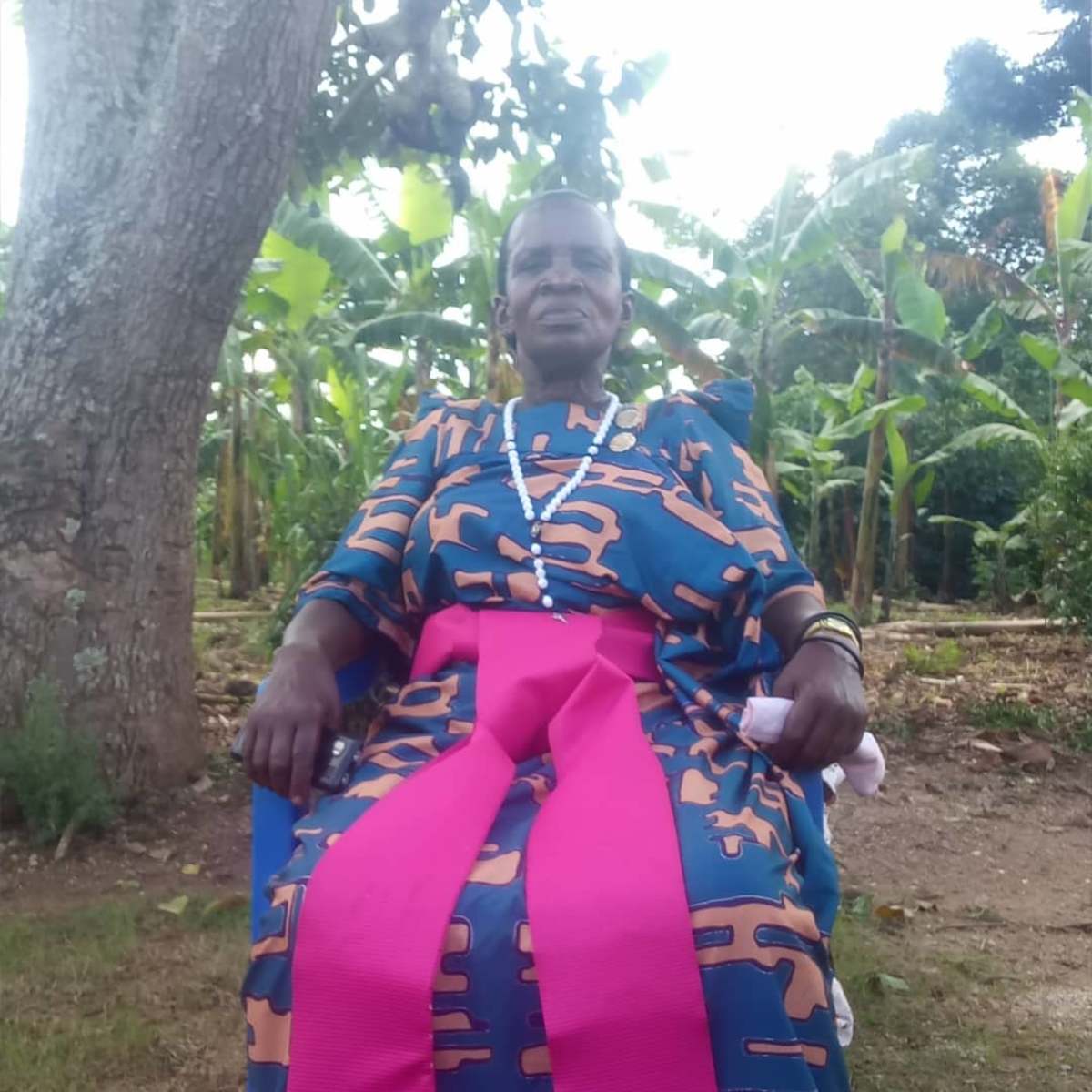
There is a version of this post where I tell you about my mother's strength, her faith, her quiet dignity, and leave it there. That version would be easier to write. It would also be, in a very real sense, a lie by omission — because the truth is, for most of my life, I didn't actually know what my mother survived. She never talked about it. Not out of secrecy exactly. Out of something closer to protection — hers, and ours.
It changed the day I realized something uncomfortable: I might be the last generation in my family to hear this story first-hand, in her own voice, before it disappeared entirely. My mother is not a naturally talkative woman. She is aged now, and she has never been the type to sit us down and perform her own history for an audience. So when I finally asked her to tell us — really tell us, in full, everything — I genuinely didn't know if she had it in her, or if I had any right to ask.
What happened next became the emotional core of Chapter 6, and honestly, one of the hardest and most important things I've ever written.
My mother was twenty years old when the 1978–79 Uganda–Tanzania War reached her village. She told us about the bombardment of the border town nearest our home, which she first mistook, in the chaos of the first hours, for an unusually violent thunderstorm. She told us about fleeing through bush and swampland with three children under the age of three — one of them tied against her own body, another balanced in a wooden box lashed to a borrowed bicycle — crawling on her stomach beneath gunfire, hiding in a refugee camp where mosquitoes the size of small jets fed on anyone still enough to be caught, where a storm she still describes as something like a tornado flattened half the shelters in a single afternoon. She told us about a second displacement, when the war swept back through and undid whatever safety they'd found. She told us about the four separate times she nearly died.
We sat under an avocado tree while she told us this, over the course of several afternoons, because — and this detail still moves me every time I think about it — she could only give us an hour or so before her next church meeting, or before lunch needed making, or before the day simply demanded she be someone other than a witness to history for a while. There is something almost unbearably human about that. The worst thing that ever happened to my mother, and she was still fitting the telling of it in between chores.
I made a promise to myself while writing this chapter: I would not let her memory die with her. Uganda's civil wars are, by international standards, some of the least documented conflicts of the twentieth century — this one especially, lasting only seven months, too short, apparently, to draw the world's sustained attention even while it was reshaping an entire generation of families like mine. So this chapter is, in part, an act of preservation. It's oral history, recorded by a son who almost didn't ask in time.
I won't give away everything here — there's a reason the book exists, after all, and some of what my mother told us is simply too much to summarize in a blog post without doing it an injustice. But I will tell you this: by the end of writing this chapter, I understood my own resilience differently. I come from a woman who survived a war with three babies and a borrowed bicycle, and then came home and quietly raised twelve children anyway. Whatever I've managed to build in my own life, I built standing on ground she cleared for me first, at a cost I'm still learning the full shape of.
The Dream From Dust is available for pre-order now on Amazon, with release set for February 2027. If this story moved you even slightly, I'd be grateful if you'd follow along for what's coming next, share this post with someone who needs to hear it, and consider leaving a review once the book is in your hands. Stories like my mother's only survive if someone keeps telling them.