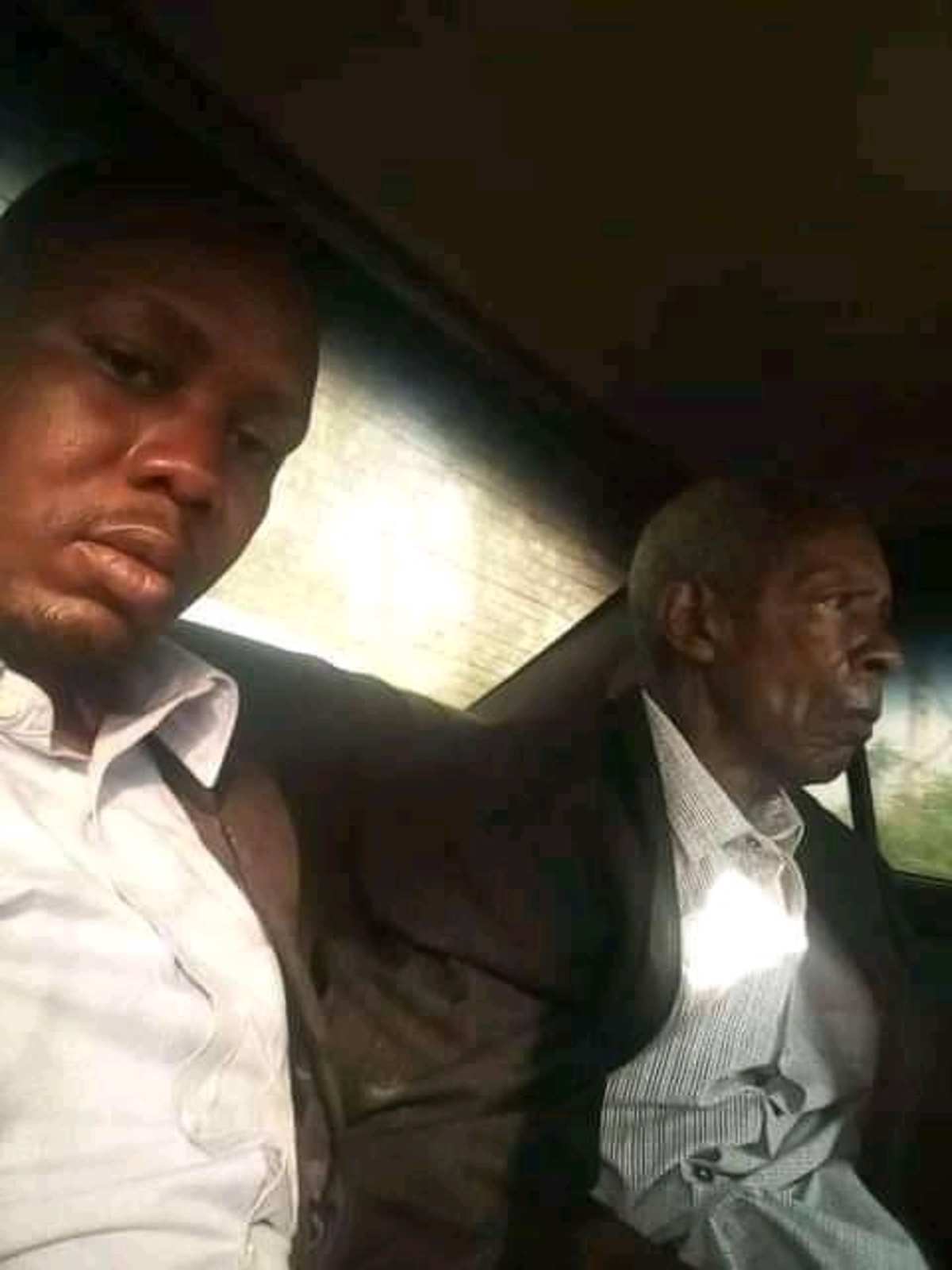
My Father Knew Everything About How Things Work — Except How to Stay
My father's day began at five in the morning, on the days when he was sober.
That qualifier — on the days when he was sober — is doing a great deal of work in that sentence, and I want to be honest about what it is carrying before I go further. Because the man I am about to describe is not a simple man, and he does not deserve the simplification that comes from either hagiography or accusation. He was a genius and a drunk and a teacher and an absence, sometimes all in the same week, and I have spent my adult life trying to hold all of those things at once without letting any one of them cancel the others out.
I have not always succeeded. But I keep trying.
The Radio Boxes and the Tool Drawers
In 1999, when I was six years old, the thing I remember most clearly about our four-room mud house was the corner of the dining room.
There was an old, large wooden radio cassette in that corner — the kind with four stands, a significant object, a presence. Around it, everywhere: old radios, spare parts, tool boxes. Suckers. Solder pumps. Nails. Wires. Tapes. Motherboards. Screwdrivers. The smell of electronics and oil and something metallic that I have never been able to name.
My father could fix anything.
This is not a son's exaggeration. He was the best bicycle repairman in our village — a distinction that mattered more than it might sound, because bicycles were primary transport and primary livelihood, and the person who could make them run again was, in a real and practical sense, keeping people's lives running. He repaired radios. He did electrical work. He was a gardener, a motorcycle mechanic, a hunter, a beekeeper, a fisherman, a house builder. He had been village chairperson. He had taught English.
The range of it was extraordinary. Here was a man who had built the internal architecture of himself — skill after skill, acquired through observation and practice and a refusal to accept that anything was beyond his understanding — in a village that offered no formal apprenticeships, no trade schools, no infrastructure for that kind of accumulation.
He built it anyway.
I was watching. I was always watching.
The English He Loved
My father had formal education, more than most in Kisaka. He loved to communicate with us in English — not as performance, but as commitment. He liked hard grammar. He liked precise language. He believed that the right words, put in the right order, could do things that no other tool could do.
This was not a small thing to give a child.
Because what it gave me, before I had any other resource, was the conviction that language was power — that the way you assembled words was not decoration but architecture, and that architecture could hold things up or let them fall depending on how carefully you built it. I did not know yet what I would build with that conviction. But the conviction itself was already forming, in the dining room with the radio parts and the tool boxes, listening to my father speak with the care of a man who understood that words were the most precise instruments he owned.
He never acquired much wealth. This is simply true and I say it without judgment. A man can be a genius and still not convert that genius into the kind of material security that the world measures genius by. My father was one of those men. The tools and the knowledge and the English and the chairmanship and the twenty different occupations — none of it produced the thing the world calls success.
It produced me instead. I am trying to decide how I feel about that.
— Lukonge M Achilees-
Author of The Dream From Dust