The Tears She Thought No One Saw
She carried the wars of the 1970s in her body.
The fighting that moved through this region took many of her siblings. She did not speak of it often. When she did, it came out sideways — in a prayer, in a silence, in the way she sometimes sat alone in her bedroom with the rosary, and you would see the tears on her face before she noticed you were watching.
I carry my mother's pain in my heart. I have said this and I mean it precisely. Not as a metaphor. As a description of something I feel in my chest when I think about her — a weight that belongs to her but that she somehow transferred to me through years of watching her carry it alone. I did not ask for it. She did not intend to give it. But it passed between us the way so many things pass between mothers and the children who are most like them — silently, completely, without ceremony.
She once said I was her most like her. The politeness. The passion. The quietness. The way of turning inward when the world got loud.
I fell asleep once with my head in her lap. She sat quietly, her hand moving through my hair. I was exhausted — the exhaustion of a boy who had started trying to be a man before he had the equipment for it. And in that exhaustion, unexpectedly, tears came. My eyes were closed. The tears ran anyway. They dropped on my folded knees and soaked into her Gomesi.
She did not stop the caresses. She did not ask what was wrong. She already knew. Her fingers kept moving through my hair, and she did not say a single word, and it was the most completely understood I have ever felt in my life.
I have been trying, in various ways, to describe what she gave me ever since.
Possessions meant little to her. There was one exception: the rosary, the Bible, the prayers. These she kept always. These she turned to with the regularity of breathing.
She did not receive a formal education. She read English with difficulty, if at all. But she could assemble phrases in her local language with the precision of a trained writer — fairy tales, memories, moral instruction — and store them in a mind that retained everything it touched.
I inherited this from her, I think. The ability to watch and absorb and keep. The capacity for language that is not decoration but necessity.
What I have done with those inherited gifts — and what nearly prevented me from doing anything with them at all — is the story that I have spent years trying to find the right words for.
I have found them now. Or most of them.
There is one part of the story that the blog cannot hold. One thing that happened — that I cannot finish telling here — that is the reason the book exists.
— Lukonge M Achilees-
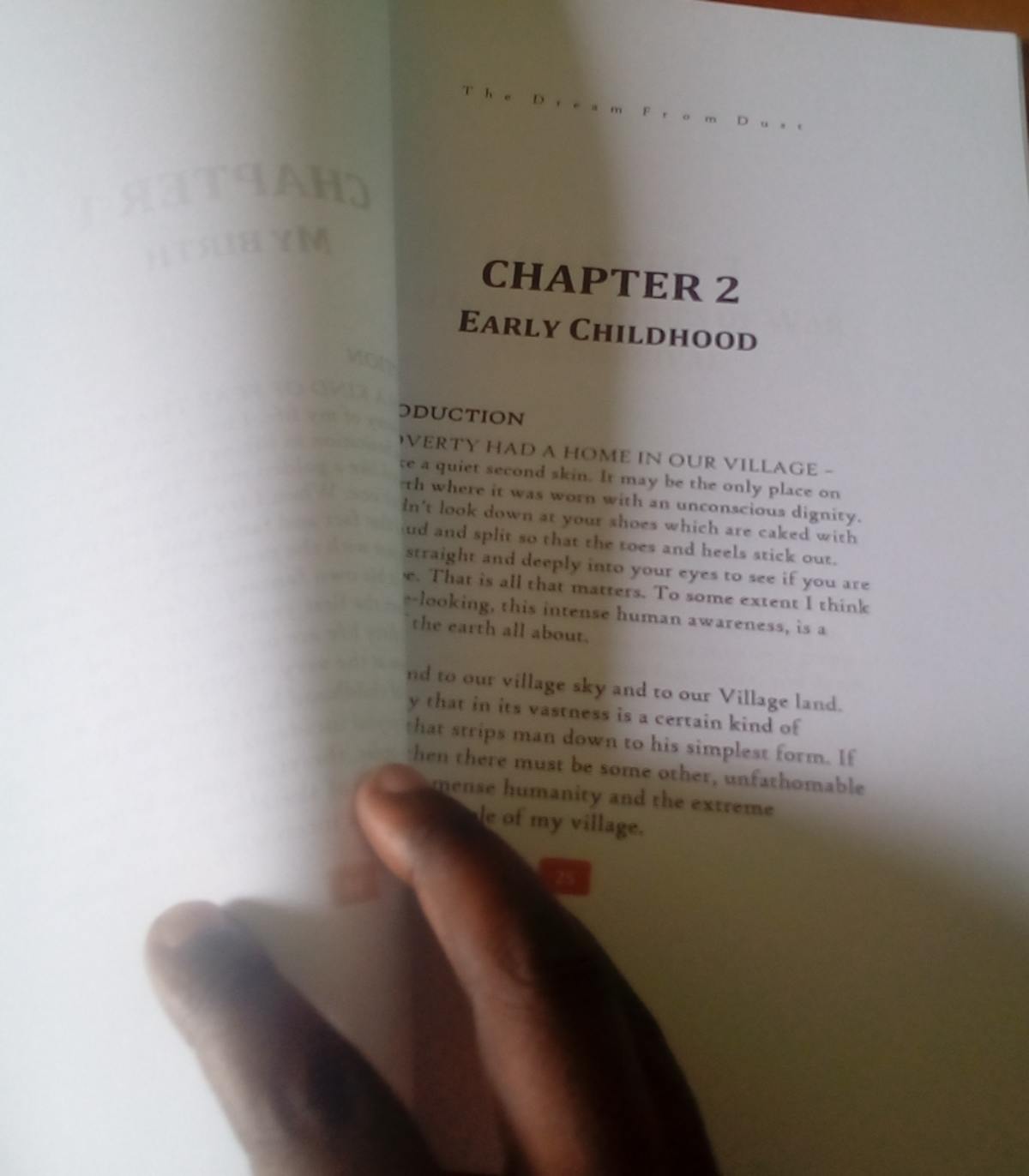
Author of The Dream From Dust