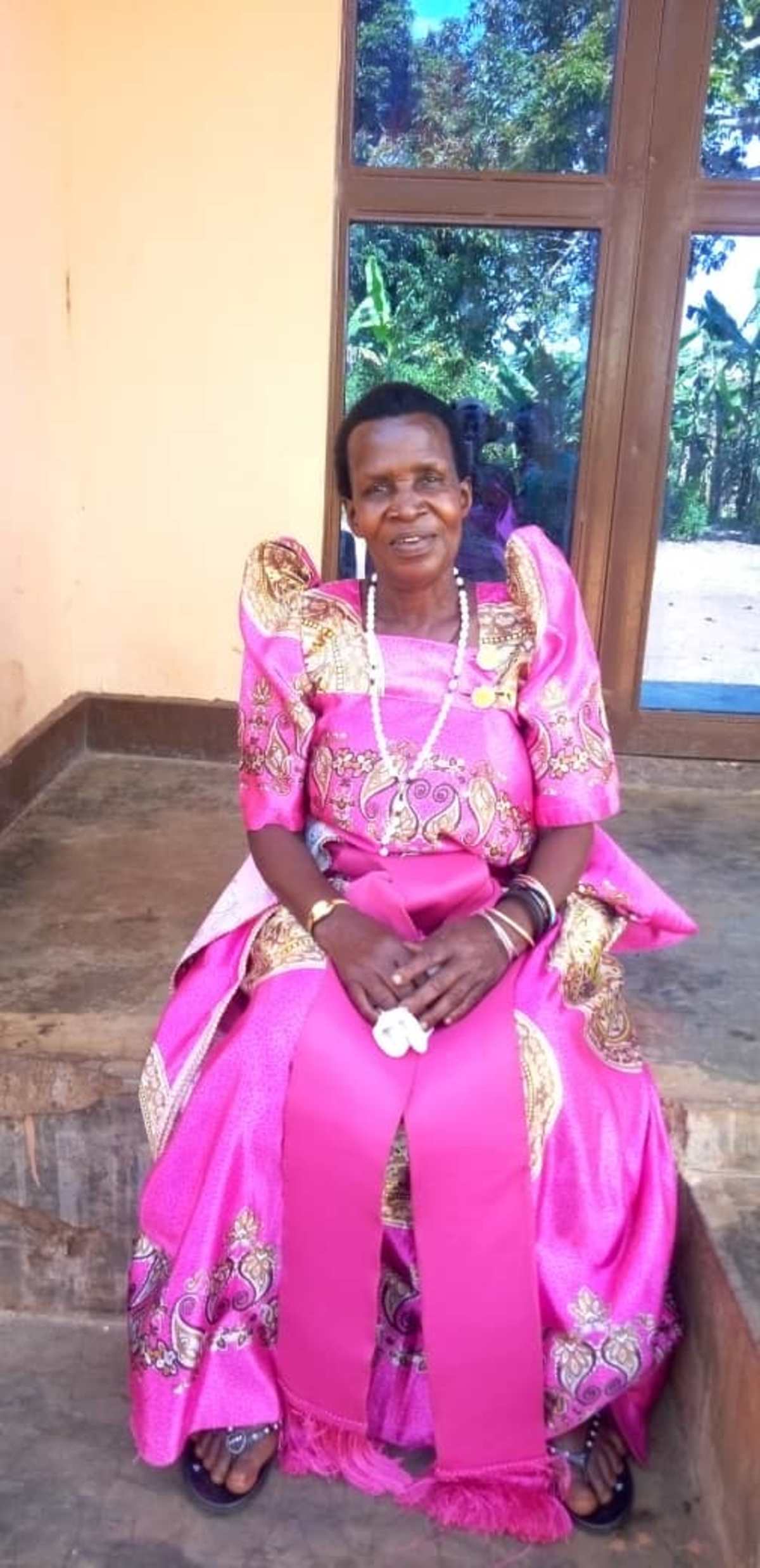
What She Grew and What She Gave Away
She turned her garden into a supply chain
My mother grew vegetables and fruits and food in the yard — not flowers, not grass, not anything that was primarily for looking at. She planted strategically: enough variety and enough succession that she could harvest across the long growing season. And then she gave it away. Whoever needed it. Whoever asked.
I am aware that this sounds like the kind of thing people write in eulogies — the generous mother, the giving woman, the saint of the village. I want to resist that framing, because it softens something that was actually quite radical. She was not generous the way people with surplus are generous. She gave from the portion that was ours. She gave before she kept. She structured the household so that the first claim on its output was the community's, not the family's.
There was a network of these women — the informal mutual aid group called Muno Mukabi — who operated across the village, feeding the deceased family's mourners, feeding the homeless, maintaining the minimum threshold of dignity that a village requires to keep functioning. My mother was a node in that network. She did not think of it as sacrifice. She thought of it as normal. As what you do.
I think about the economics of that now, as an adult who has lived in cities and read books about development and community resilience. I think about what it takes to maintain a functioning social fabric in conditions of extreme material scarcity, who does that work, and what it costs the people who do it. It costs the mothers. It costs the women. It costs the Rosemarys.
She never once complained. This is not me mythologising her. I am reporting what I observed over many years of careful watching. She never showed irritation. She never showed resentment. She served with what I can only call a terrifying consistency — the consistency of a person who has decided, at some foundational level, that this is what their life is for, and has made peace with that decision.
The Born-Again Preachers and the One Mistake
She had a rigidity in her, too. I would be lying if I left it out.
She was a staunch Catholic — fiercely, sometimes unforgivingly so. When the born-again Pentecostal movement began reaching into the corners of Uganda in the early 2000s, and a group came to pray for our family, she did not welcome them. When my brother Julius and my sister Doreen joined a compassion programme run by that religious group — one that offered poor children access to education — my mother's discomfort was such that Julius was pressured to withdraw. Doreen left too.
My uncle Mutawe stayed. He was the one my mother had once fed and sheltered and cared for. He stayed with the compassion programme, which took him further in education, which set him on a path to become one of the most successful men in our village, running charitable organisations — the Rakai Orphans Development Initiative, later rebranded to Act International Mission — that have done more good for that community than I can summarise here.
My brother Julius, who left the programme, became a drunkard for years. He was shot by thieves on a dark Kampala road while riding his Boda Boda — the bullet pierced his lower right abdomen and should have killed him. He survived. He eventually found the faith he had been denied permission to seek, and is better now.
My mother knows this. She no longer holds the rigidity she held then. The world moved and she moved with it, in her own time, in her own way.
But those two children — Julius and Doreen — were denied their chance at education by a decision made in faith. That is the one thing, in a life of extraordinary service, that I believe she would undo if she could.
I am not writing this to punish her. I am writing it because a true portrait includes the shadow. She was not a saint. She was a person — brilliant, devoted, fierce, loving, and wrong once, in a way that had consequences. That makes her real. That makes her worth writing about.
— Lukonge M Achilees-
Author of The Dream From Dust